Machu Picchu 2 Day Itinerary: Honest Tips, Circuits & What to Expect (2026)
I’m going to be upfront with you. Most Machu Picchu guides are written by people who spent three hours there on a day trip from Cusco and called it expert advice. I spent two days. I made mistakes. I stood in a rainstorm with a wet backpack and changed in a train station bathroom. I want to get that out of the way upfront because it matters.
The 3 PM entry is the single best decision you can make at Machu Picchu. Nobody tells you that because most people are optimizing for the morning train schedule. But I walked Circuit 2 at 3:00 PM with maybe twenty other people in the entire upper section. Do with that what you will.
The Machu Picchu 2 Day Itinerary at a Glance
| Info | Day 1 | Day 2 |
|---|---|---|
| Entry time | 3 PM | 8 AM |
| Circuit | Circuit 2 (Classic) | Circuit 3 (Lower) then Huayna Picchu |
| Crowds | Nearly empty | Overwhelming |
| Highlight | Golden hour, near-empty ruins | Huayna Picchu summit |
Best time to go to Machu Picchu: April, May, September, October (shoulder season, thinner crowds, decent weather)
How far out to book Machu Picchu tickets: 3 Months minimum (as soon as you have your plans finalized). Especially for Huayana Picchu. Morning slots sell out fast for Circuit 2…but we want to actively avoid the morning slots anyway.
Why a 2 Day Machu Picchu Itinerary is the Right Call
Most people do Machu Picchu as a day trip from Cusco. Up at 3 AM, train at 6, bus at 7, walk the ruins for a few hours, train back by 4, asleep by 9. It’s efficient. It’s also exhausting and you share the site with everyone else who had the same idea.
Two days gives you something the day-trippers don’t get: contrast.
Day 1 we entered at 3 PM, walked Circuit 2, and had the place nearly to ourselves. Golden hour light, zero fighting for photo spots. Day 2 we walked Circuit 3 to the Huayna Picchu trailhead, hiked up, and shared the trail with large tour groups blocking every narrow section. Both were worth it. But they’re completely different experiences.
(I realize I sound like I’m trying to sell you on a second day. I’m not. I’m just saying that if you can swing it, you get two versions of the same place for the price of one extra night in Aguas Calientes. The first version is serene. The second feels like the kind of experience you plan for months. Both are real.)
Best Time to Visit Machu Picchu
The dry season in the Sacred Valley runs May through September. That’s also peak tourist season. June, July, and August are the worst for crowds and the best for weather. You pick your poison.
We went in October. October is technically the tail end of dry season. It’s also shoulder season, which means:
- Crowds are noticeably thinner
- You can still get the ticket slots you want without booking 8 months out
- The weather is mostly clear with occasional afternoon rain (which is what happened to us)
October won’t give you the guaranteed clear skies of July. But it will give you a better ratio of experience to crowd density. I’d make that trade every time.
November through April is wet season. Cheaper, emptier, but you’re gambling on rain. If you go then, aim for a morning entry when the clouds are still high and the rain hasn’t started yet. Make sure your trip is covered by insurance.
How to Get to Machu Picchu (Train + Bus)
There are two rail operators: PeruRail and IncaRail. Both go from Ollantaytambo or Cusco (Poroy station) to Aguas Calientes, the town at the base of Machu Picchu. We took PeruRail Expedition class from Ollantaytambo. About 1.5 hours each way.
The clear-roof panoramic car, which I was excited about, is basically a greenhouse on rails. The sun comes through that glass and the glare gets intense fast. I ended up leaving my seat and sitting on the floor by the bathroom because the glare was giving me a headache. Other passengers kept asking if I was okay. (I was fine. Just hot and squinting.) Bring a hat and sunglasses. Maybe sit on the aisle side.
The bus from Aguas Calientes to the ruins is a separate ticket, about $12 each way per person. It runs from 5:30 AM until the site closes. The ride is a series of switchbacks up a steep mountain. Sit on the left side going up for the better views.
(I’ll have a full breakdown of PeruRail vs. IncaRail, the different classes, and exact pricing in a separate post. This is the short version.)
Where to Stay in Machu Picchu (Aguas Calientes & Ollantaytambo)
Ollantaytambo (Night 0): We stayed at Hostal Valle Inca the night before the train. It’s about 90 minutes from Cusco, cheaper, quieter, and puts you right at the train station for the morning departure. Clean, warm, did the job. Also worth knowing: there’s a place called Polleria Doña Eva nearby that does excellent rotisserie chicken. Cheap, fast, no-fuss. If you’re staying in Ollantaytambo, that’s your dinner sorted.
If you’re staying in Ollantaytambo and have luggage, just take a short taxi from the center to the train station. It’s a few minutes, cheap, and saves you the walk across cobblestones with a roller bag.
Aguas Calientes (Night 1): Vilas Insight Machu Picchu. They held our bags after checkout while we did Day 2. Good breakfast. Fine room. You’ll hear noise from other rooms, but it’s a short walk from the bus station and it got the job done.
Day 1 — Circuit 2 at 3 PM (The Afternoon Trick)
Here’s the single most important thing I can tell you about Machu Picchu: enter at 3 PM.
Most people book morning tickets. The first buses start running from Aguas Calientes around 5:30 AM, and by 7 AM the citadel has a decent crowd going. By 11 AM, it’s a theme park. The bottleneck is the afternoon train schedule. People need to get back to Cusco by evening, so they filter out of the ruins between 1 PM and 3 PM.
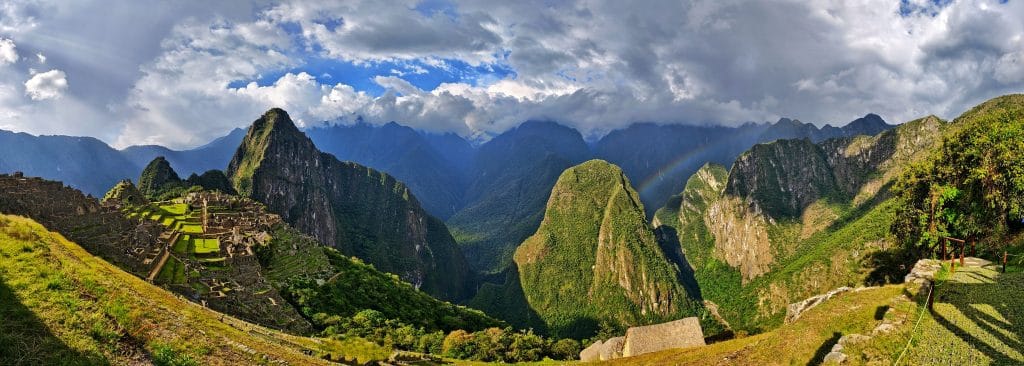
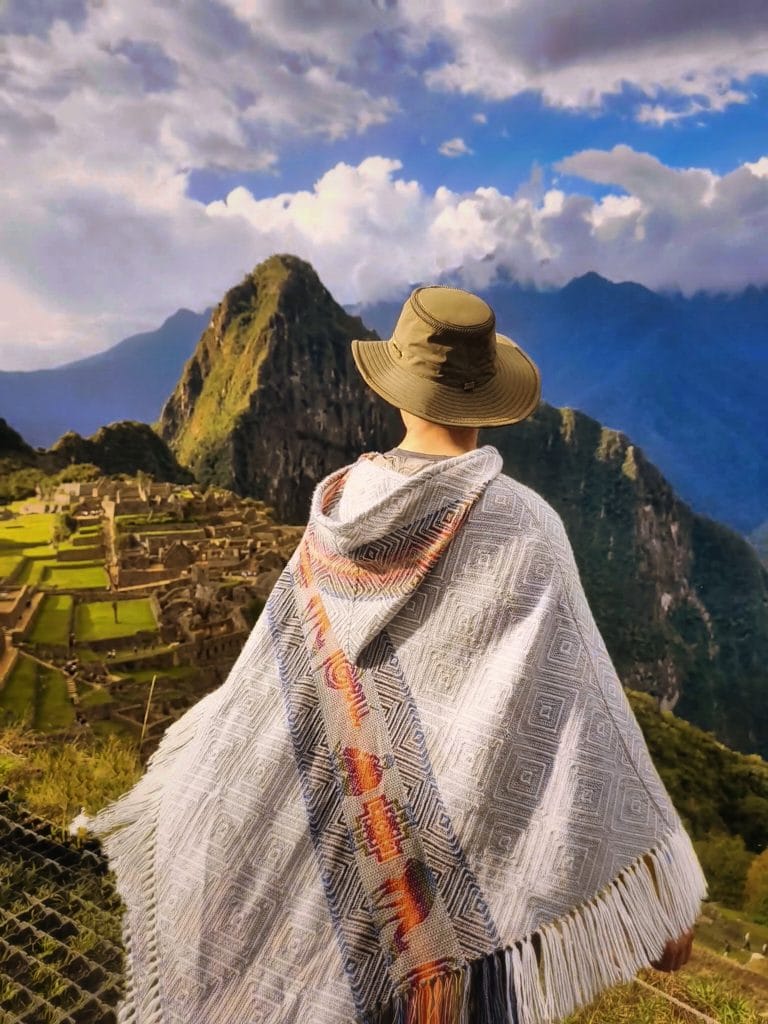
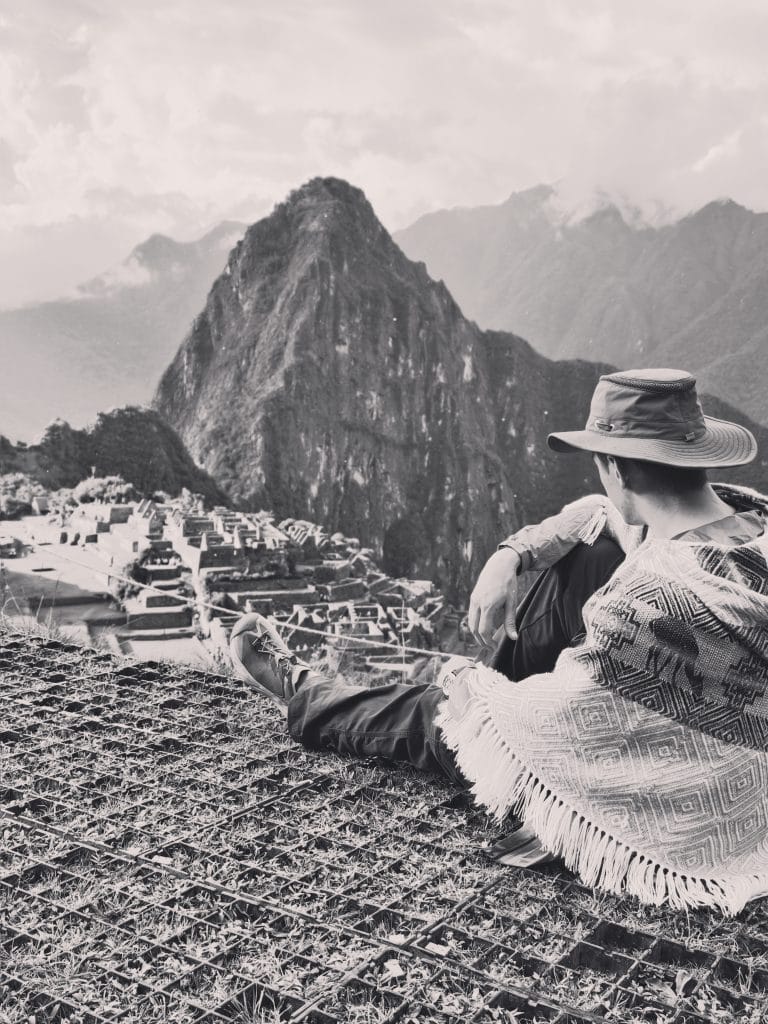
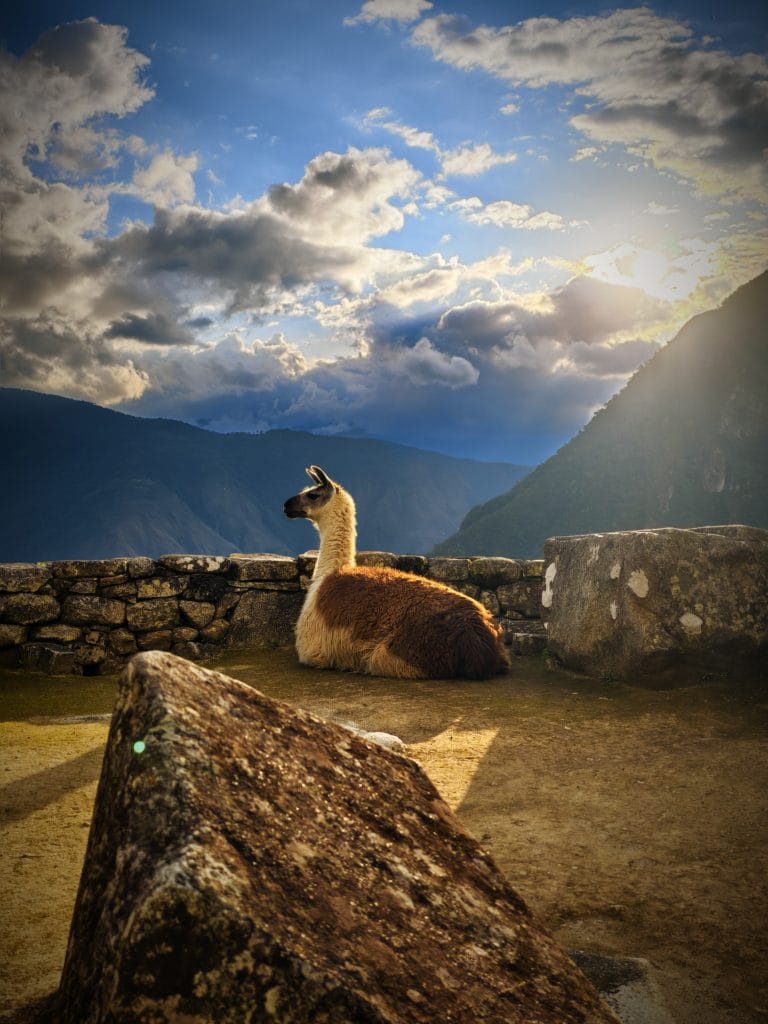
We walked up at 3 PM. The light was shifting from harsh white to warm gold. The wind had dropped. We walked Circuit 2, which is the most complete route. It covers the upper viewpoints (the ones you see in every postcard) and the main urban sector. The Temple of the Sun, the Room of the Three Windows, the main plaza. At 3:30 PM, we had entire sections to ourselves. I took the classic postcard shot from the upper terrace and there was exactly one person in frame. I waited ten seconds. She moved on. Then it was just the ruins.
(I should note that this is not a guaranteed experience. The afternoon entry is not a hack that nobody knows about. It’s just a timing decision that most people don’t make because they’re optimizing for the morning train schedule. The trade-off is that you lose the afternoon for other activities. The upside is that you get Machu Picchu in its best light, literally.)
Circuit 2 explained briefly: It’s the classic circuit. Upper viewpoints for the panoramic shot, then down through the main temples and residential areas. If you only have one day, this is the circuit to book. Route 2-A or 2-B, either works. (Full breakdown of all three circuits and the ten sub-routes coming in a separate post.)
How to Find a Machu Picchu Guide
The bus line up to the site is one of the largest lines I’ve seen anywhere. A significant portion of the town is effectively just lined up for the bus. Efficient-ish, but overwhelmed by the sheer volume.
While we were in line, a private guide approached us. He quoted a price that was too high for our budget. We wanted $20 per person and were willing to do a small group. Later, an older independent guide came up, heard what we were looking for, and said he’d found three other people to form a group. The price fit. We took it.
He showed us everything. Told us the history and the theories. Let faster groups pass us. We were among the last visitors to exit the park, security ushering us out. It was the best day of the trip.
Day 2 — Circuit 3 + Huayna Picchu (The Overwhelming Contrast)
Day 2 started differently. We walked Circuit 3 first (the lower route through the agricultural terraces) because the trailhead for Huayna Picchu connects from that side. Circuit 3 is a completely different perspective from Circuit 2. You’re walking at ground level through the Incas’ actual farming infrastructure. Less dramatic than the upper viewpoints, but more intimate. You see the stonework up close, the drainage systems, the way the terraces were engineered to prevent erosion.
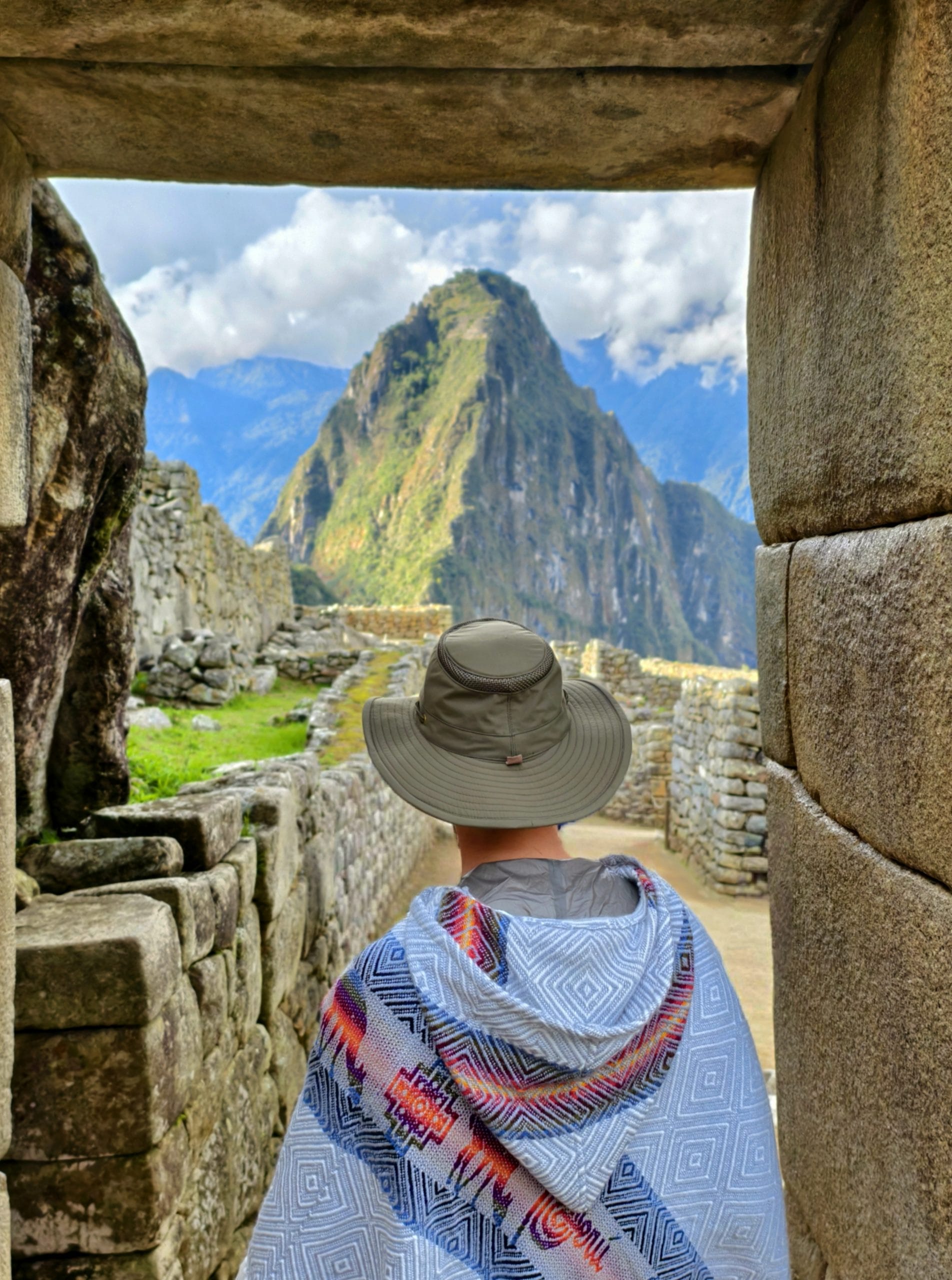
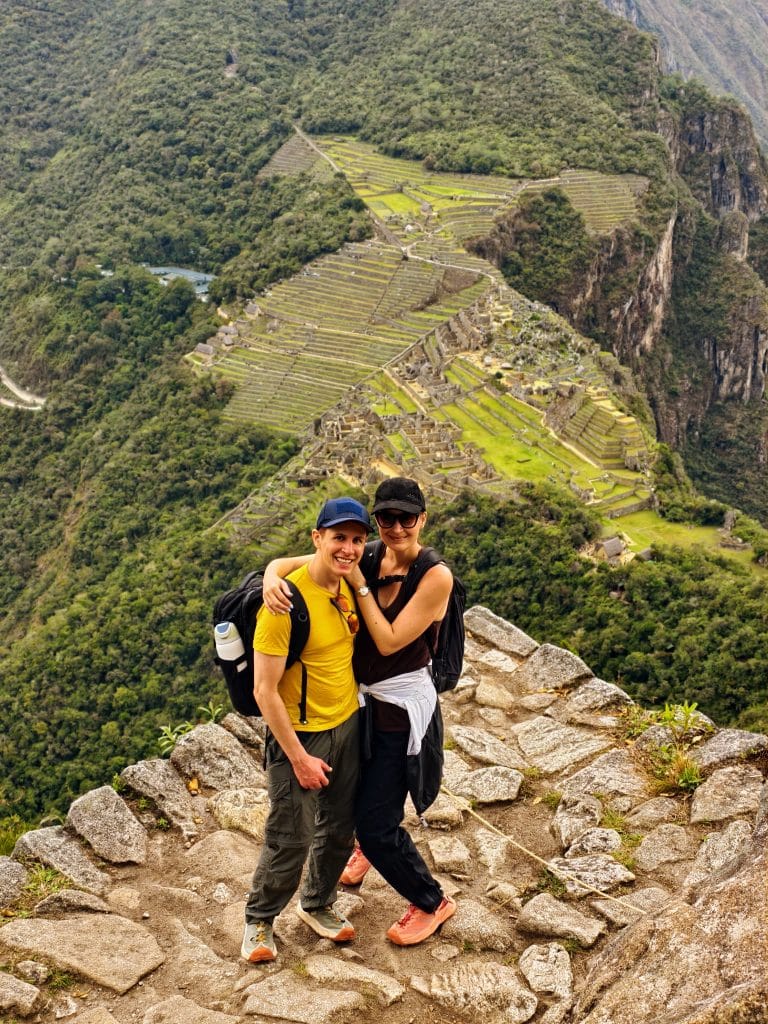
Then we hit Huayna Picchu. Huayna Picchu is the steep, iconic peak that looms behind the classic postcard shot of Machu Picchu. The one that looks like a green thumb sticking up behind the ruins. Views from the top are exactly what you’d expect. Permits are limited and sell out faster than the main entry.
The hike itself is steep, exposed, and takes about 2-3 hours in total. Obviously some were faster, some were slower. We were in the middle. The trail is narrow in sections with some genuine exposure. If heights bother you, this is worth knowing. The views from the summit are exactly what you’d expect. Worth it.
But the crowds. The morning entry at Huayna Picchu means you’re sharing the trail with large, unaware tour groups blocking every narrow section. I felt disruptive just trying to reach the trailhead. If this was my only day at Machu Picchu, I’d have hated it. The contrast with Day 1 could not have been starker.
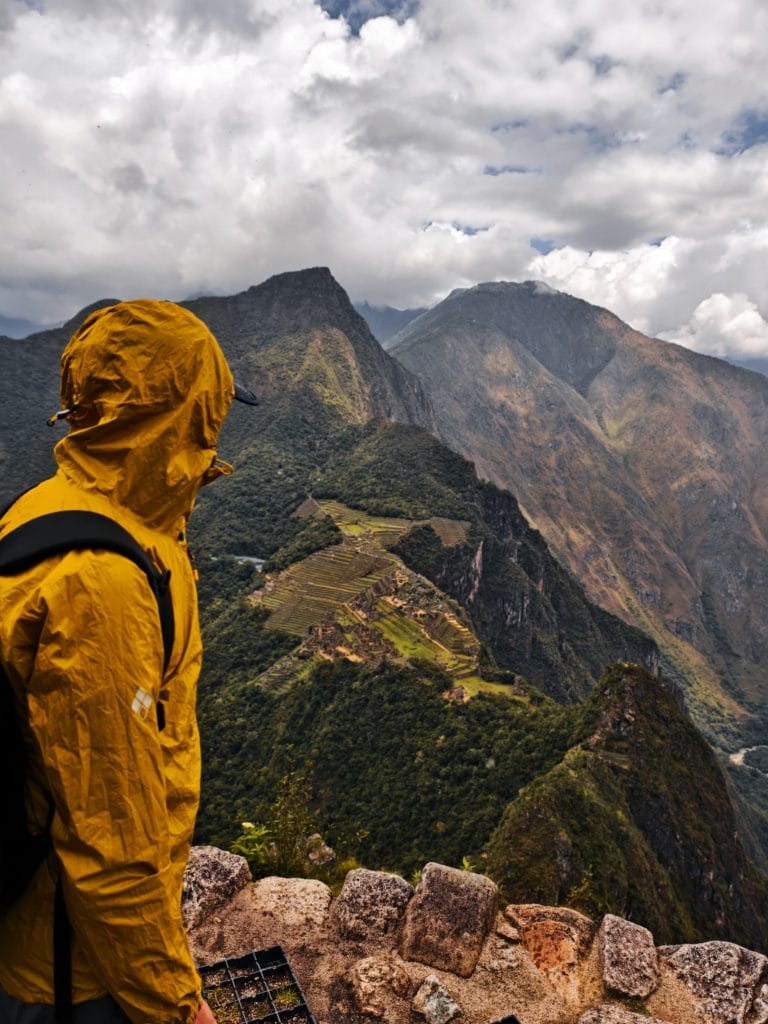
My Warning: Be Prepared for Rain
After the hike, we came back to the entrance/exit. Light rain started during the descent. Fine. I was prepared (or so I thought, with a soft shell and rain cover for my backpack).
Then it became a full downpour.
The line to catch the bus down the mountain was just as long as the line going up, now in heavy rain. We stood there for over an hour, completely soaked. Every ‘water-proof’ thing we had couldn’t withstand the amount of water it was repelling. Only a heavy-duty poncho could have worked and completely waterproof dry bag. Next time…
We collected our bags Vilas Insight held for us. But the room was gone. No place to shower, no place to change except the bathroom. So we had to start our journey home still half-freezing, half-soaked. Don’t be like us…be prepared.
Not a total disaster, but not the dignified exit you imagine after a bucket list experience. The backpack was still damp inside, even with a rain cover. (I respect the rain cover for trying. It did its job for about 45 minutes. The moisture that creeps in through the seams over time is a different problem.)
The return leg: The train back went to Poroy station, not Ollantaytambo. There was a 2+ hour unexplained delay that nobody could tell us the reason for. We had a taxi (taxidatum) waiting on the other end, which was the only thing that saved it. If you’re taking the train back to Cusco, know that Poroy is actually quicker to get to Cusco than taking a direct train to Cusco. Plan accordingly.
What I’d do differently: Book a late checkout or arrange for access to a bathroom after checkout. Pack a separate dry bag inside the main backpack with a change of clothes that stays dry no matter what. And build buffer time into the return leg for train delays.
How to Book Machu Picchu Tickets
Machu Picchu uses the Ministry of Cultures “Tu Boleto” system. Every ticket is tied to a specific circuit and entry time. You cannot buy a general admission ticket and wander freely.
Key things to know:
- Book 4 months out for high season, 3 months for shoulder season. We booked in July for October and got the slots we wanted.
- The 3 PM entry is available but it’s not always the first option you see. Look for the afternoon windows.
- Huayna Picchu and Machu Picchu Mountain are separate tickets. They sell out faster than the main entry. If you want one, book it at the same time.
- Daily visitor cap: Up to 5,600 in high season (June 1 to October 15), about 4,500 in low season.
- You can’t change your circuit or time at the gate. Your ticket is your ticket. Plan ahead.
(Full ticket guide with Tu Boleto walkthrough, pricing, and step-by-step booking instructions coming in a separate post.)
If you choose, you can book everything all together with a guide here.
Get your Peru eSim before landing and have service throughout the country.
Can you just walk up instead of taking the bus?
Technically yes. There’s a walking path from Aguas Calientes up to the entrance. But it’s a steep, exposed climb, and you’re at 2,400m of elevation already. Even if you’re fit, the altitude makes it hit harder than expected. And after a full day walking the ruins, you have to come back down the same way. The bus is thirty minutes. The walk is easily an hour and a half uphill, and you’ve already spent the whole day on your feet. I wouldn’t recommend it, especially not on Day 2 if you’re doing two days. Take the bus, save your legs for the site itself.
The Machu Picchu Circuits Explained (Which One Should You Choose?)
Since June 2024, Machu Picchu uses three main circuits with ten sub-routes. Here’s the short version:
Circuit 1 (Panoramic): Upper section. Best for the classic postcard photo of the entire citadel. Route 1-B is the one you want if you’re here for the shot.
Circuit 2 (Classic): Most complete. Upper viewpoints plus the main urban sector. The one I’d recommend for first-time visitors who want to see everything. This is what we did on Day 1.
Circuit 3 (Lower/Royal): Ground-level through the agricultural terraces. Less dramatic, more intimate. Great as a second-day option or if you’re specifically interested in Inca engineering. It also connects to the Huayna Picchu trailhead, so if you’re doing both, do Circuit 3 first.
My recommendation for a 2-day trip: Circuit 2 (afternoon, Day 1) + Circuit 3 to Huayna Picchu (Day 2). You get the classic views, the intimate ground-level perspective, and the peak hike all in two days.
(Full circuit guide with photos, maps, and route-by-route breakdowns coming in a separate post.)
Frequently Asked Questions
The Verdict
Machu Picchu is worth the hype. Its also worth figuring out the timing. The 3 PM entry, Circuit 2, and a second day for Circuit 3 and Huayna Picchu give you the best version of the experience without the crowd fatigue.
Go in shoulder season if you can. Book your tickets four months out. Pack a separate dry bag. Sit on the aisle side of the train.
(Full breakdowns of Machu Picchu circuits, train options, Huayna Picchu vs. Machu Picchu Mountain, and the complete Peru travel guide are coming. Use the links below to navigate the full series.)
Related Posts:
- Machu Picchu Circuits Explained → coming soon
- PeruRail vs. IncaRail → coming soon
- Huayna Picchu vs. Machu Picchu Mountain → coming soon
- Peru Travel Guide: How to Plan Your Trip → coming soon
Disclaimer: This post contains affiliate links. If you make a purchase through these links, I may earn a commission at no extra cost to you.