

Why You’ll Never Forget Visiting Transnistria (Pridnestrovie): The Country That Doesn’t Exist

TL;DR
Transnistria (officially the Pridnestrovian Moldavian Republic) is a 1990s time capsule where the currency is plastic, the statues are Lenin, and the “border” is a surrealist glitch in the timeline. Is it a “Soviet Museum”? No. It’s a de facto state of 460,000 people living in a geopolitical limbo. If you can handle the fact that your credit cards are useless and mobile sparling exists, it’s one of the most fascinating corners of Europe. It’s clean, surprisingly green, and feels like a glitch in the timeline where the Soviet Union never quite folded. Keep scrolling for the my experience of the Victory Day parade and visiting Transnistria.
The History of the Pridnestrovian Moldavian Republic
Before you cross the Dniester River, you need to understand the stakes. Locally, this is Pridnestrovie. Calling it “Transnistria” to a local is a quick way to signal you haven’t done your homework.
To get here, we booked a transfer both ways via Instagram (@taxi_transfer_pmr). It was $38 each way and took about two hours. The driver was professional, safe, and on time—the kind of quiet efficiency I value when moving between jurisdictions.
The region declared independence on September 2, 1990, following a crisis over language laws in Moldova. This sparked the Transnistrian War in 1992, which saw over 3,000 casualties before a ceasefire was signed. Today, it’s a “frozen conflict.” It has its own government and military, yet it lacks international recognition. About 1,500 Russian peacekeepers are still stationed here, maintaining a state of geopolitical limbo that has lasted over three decades.
A Tiraspol Travel Guide to the Soviet Aesthetic
Crossing the border feels like entering a different world. The signs suddenly switch to Cyrillic, and the trolleybuses feel like they were pulled straight from the 1960s.
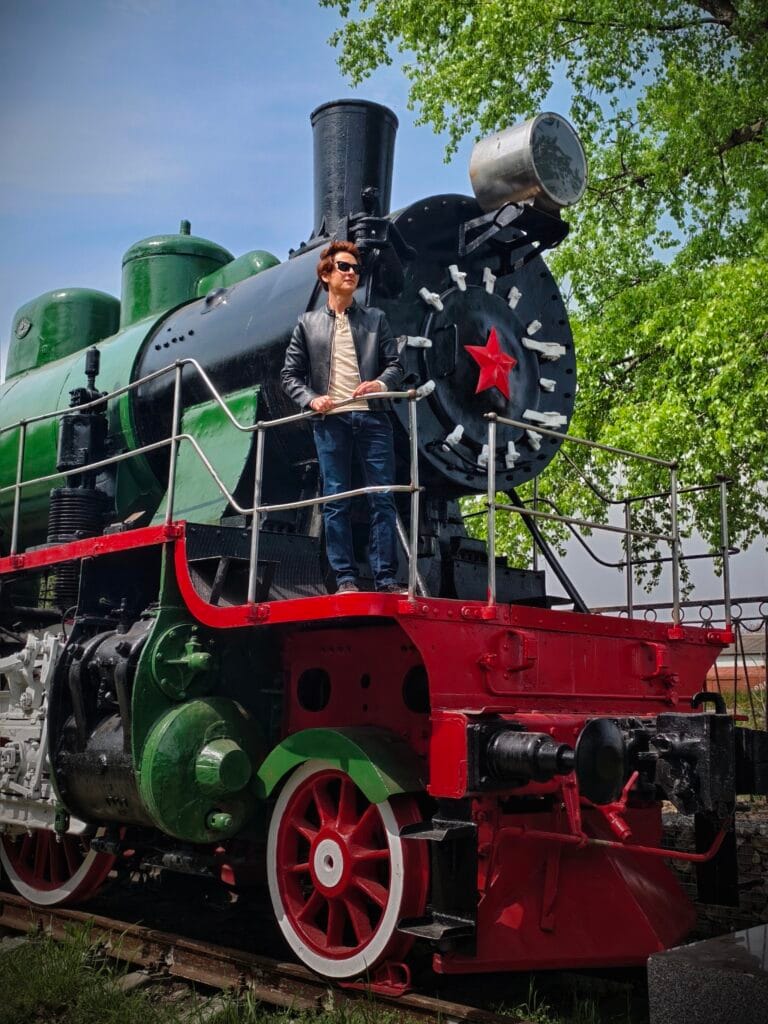
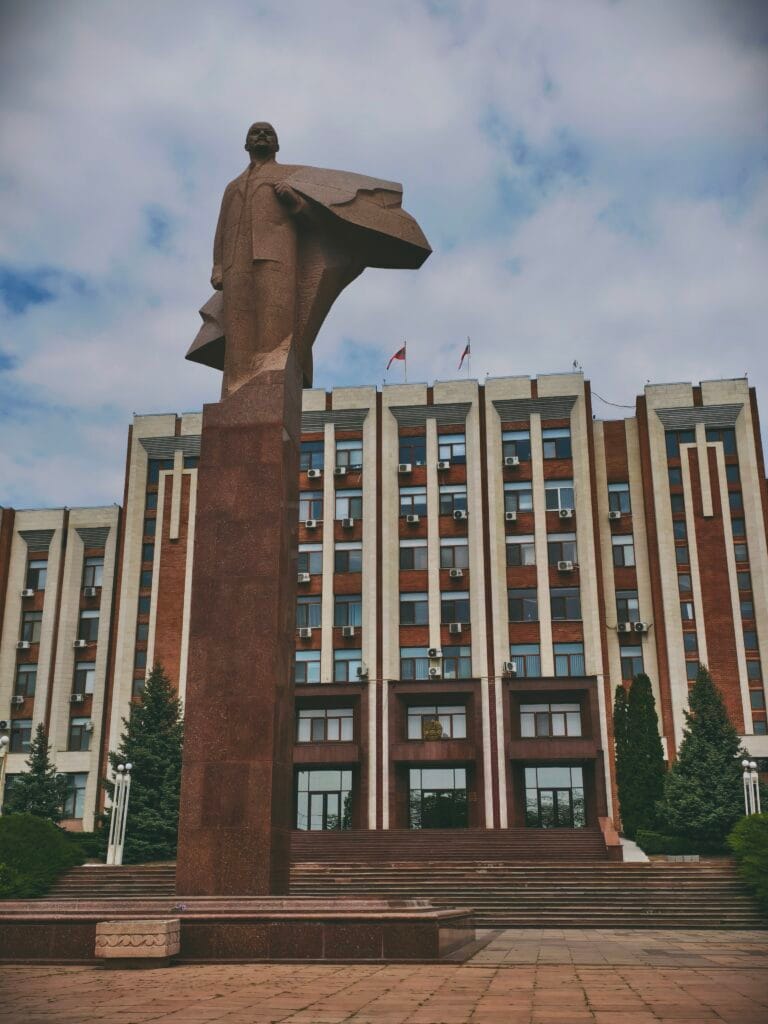
There is a distinct “outside vs. inside” reality here. The apartment blocks often look weathered or abandoned on the outside, but the interiors are frequently modern and well-kept. Tiraspol itself is one of the greenest cities I’ve ever seen, with manicured grass and trees lining almost every street. It is a city of monuments—standing on a T-34 tank or finding a massive statue of Lenin’s head in a small village isn’t a tourist gimmick; it’s the local landscape.

The eSIM and Connectivity Situation
Cell service here is about as reliable as a 1980s Lada. I grabbed an Airalo eSIM before crossing, but once you’re in Tiraspol, you’re mostly relying on free Wi-Fi in cafes. If you’re meeting someone, set a time and a place and actually show up. There is no “I’m running 5 minutes late” text here. It worked perfectly for the rest of our Moldova trip.
Experiencing the Pridnestrovie Victory Day Parade
If you want the full atmosphere, you visit on May 9th for the Victory Day celebrations.


The “Immortal Regiment” march is a heavy experience—thousands of people walking in silence holding photos of family members who fought in WWII. It’s patriotic, surreal, and underscored by Soviet-era patriotic music playing from street speakers.
The military wasn’t the most ‘in sync’ I’ve seen, but both the very young and old participated. Before the parade, the (not so) secret police was securing the area. While they didn’t bother me, a few other visitors I talked to had their passports photographed and were lightly questioned.
During the parade, I was approached by a crew from the official PMR Tiraspol TV channel. They followed us for half a day, filming and wondering why visitors would choose to spend their holiday there. The crew was young, professional, and spoke excellent English. It’s a strange feeling being the temporary face of tourism for a country that doesn’t officially exist.
Check out the clip below from “Good Morning Pridnestrovie.”
Things to Do in Tiraspol and Bender
It’s easiest to a Book a tour for the local experience if you can’t speak or read Russian, and most of all, gain local perspective.
Bender Fortress and the War Museum
Bender is the first major town you hit after the border. The Bender Fortress is a must-see—you can look out over the Dniester and explore the old ramparts. There is also a museum dedicated to the 1992 conflict that provides a very different perspective than what you’ll hear in the West.

Chitscany Monastery and the Bell Tower

Chitscany Monastery and the Bell Tower
A short drive from the capital takes you to the Chitscany Monastery. It’s a quiet, beautiful complex that offers a break from the military monuments of the city center. Smiling from the bell tower with the monastery in the background, you realize how much beauty exists in the middle of this geopolitical standoff.
Visit the Kvint distillery, where the local (and quite tasty) brandy is made, or just sample it throughout town.

The Village History Museum
We found a small museum in a nearby village run by a local couple. They didn’t speak a word of English, but they showed us their collection of WWII artifacts with immense pride. We signed their guestbook, they took our photo, and we left with a deeper understanding of how much the history here matters to the people living it. Later, when we desperately needed a taxi (but couldn’t order one without service), the wonderful family drove by and offered us a ride to Tiraspol.
The People You Meet in “Frozen” Places
One of the best parts of traveling to places like this—or North Korea, or Iraq—is the group it attracts. Our circle included an eye surgeon from the UK, an anesthesiologist from Belgium, a 19-year-old Irish kid, and a British accountant who doubled as a magician. These are people who prioritize interesting experiences over easy ones.
We also met our guide (@tour_pridnestrovia), a British expat who moved here four years ago. It was helpful to get an outsider’s perspective on the logistics of living in a breakaway state, though I did miss the nuance of a local view. There’s a specific depth you only get from someone who grew up speaking Russian and navigating this system from the inside.
Back in the USSR
Eat at Back in the USSR cafeteria or restaurant for traditional food and decor. It’s more for the experience, but the food was fine.


Meet locals for Karaoke
As usual, I attended a karaoke on the main street of Tiraspol. The group was lively and once they heard I was a foreigner, they were eager to talk. The entrance was 50 rubles and was open late with good sound.
Is Transnistria Safe for Tourists?
The short answer is yes. As long as you respect the local rules—like not taking photos of the military or police—it is remarkably safe. Tiraspol is cleaner and quieter than most European capitals. We felt fine walking home at night.
The main challenge isn’t safety; it’s the lack of infrastructure we take for granted. Card payments are non-existent, and your cell service will likely cut out the moment you cross the river. But for the traveler who values meaning over convenience, the trade-off is worth it. Do note that many governments advise against travel to the region due to a lack of consular support. Make sure you have insurance like SafetyWing which covers less traditional destinations.
Where to Stay in Tiraspol?
We rented a flat just 10 minutes walk from the center in a local area. It looks rough from the street, but the apartment was clean and modern.
If you want something more “official,” Hotel Rossiya is the classic choice.

Transnistria FAQs: Visa, Currency, and Travel Tips
The Final Verdict on Visiting Pridnestrovie
Pridnestrovie isn’t a “museum” of the Soviet Union—it’s a living, breathing society that has found a way to function in the cracks of history. It offers a perspective you won’t find anywhere else. The people we met were super friendly and kind and seeing experiencing this city opened my eyes to a different way of living.
Disclaimer: This post contains affiliate links. If you make a purchase through these links, I may earn a commission at no extra cost to you.


One Comment