Wadi Rum Tours & Desert Guide: What to Know Before You Go (2026)
TL;DR:
Wadi Rum is the most visually stunning place I’ve been in the Middle East. It’s where they filmed The Martian, Dune, Rogue One, and about half of Lawrence of Arabia. It’s a UNESCO World Heritage site. It’s also a full-on tourism ecosystem now, with hundreds of desert camps, jeep tour operators, and Bedouin families running the whole thing like a well-oiled machine. You’ll do a jeep tour, eat Zarb (chicken and lamb cooked in an underground oven), watch the sunset from a dune, and sleep in a tent under more stars than you’ve ever seen. One night, two days is the sweet spot. The Heritage Arab Revolt train is genuinely fun. The hot air balloon is worth the money. Read on for the best Wadi Rum tours.
Who this guide is for: First-time visitors who want the honest version, which camp to book, how long to stay, what the jeep tour actually covers, and whether the balloon is worth the 5 AM wake-up call.
What Is Wadi Rum?
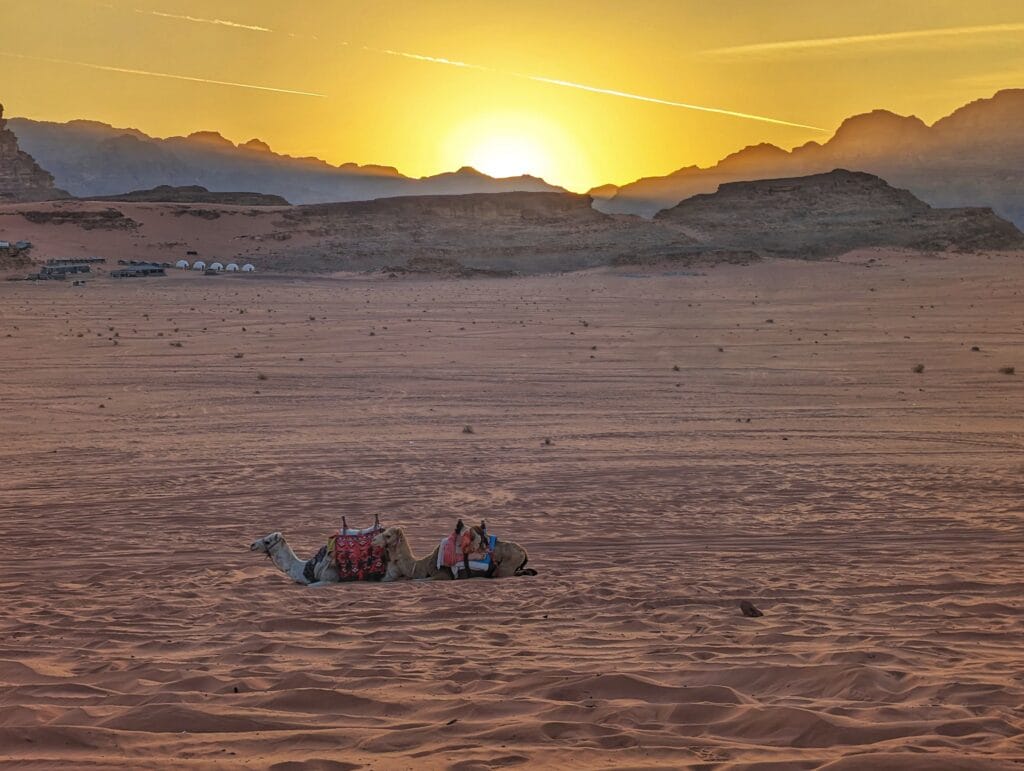
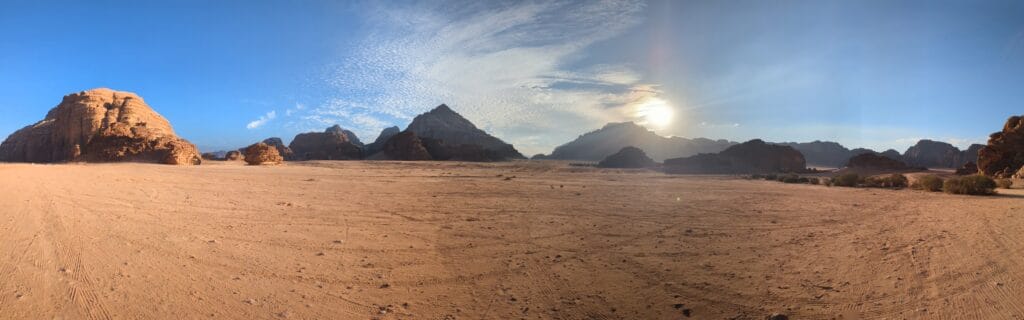
Wadi Rum is a protected desert wilderness in southern Jordan, about 60 km east of Aqaba. It’s 720 square kilometers of sandstone and granite mountains, red sand dunes, narrow canyons, and open desert that looks exactly like Mars filtering through a warm Instagram filter. The Bedouin have lived here for centuries. T.E. Lawrence (of Arabia) wrote about it. NASA has tested rovers here. It’s that kind of place.
But here’s the thing nobody tells you. Wadi Rum isn’t just a landscape you look at. It’s a landscape you participate in. You don’t drive through and take photos from a window. You get in the back of a 4×4 and bounce around for four hours. You climb a sand dune and realize going up is hard and going down is harder. You stand on a rock bridge and look at an expanse of nothing that somehow feels like everything. You’re not a spectator. You’re in it.
How Many Days Do You Need for a Proper Wadi Rum Tour?
One night, two days. That’s the correct answer.
Most people arrive from Petra around midday, do a half-day jeep tour, watch the sunset, eat dinner, stargaze, sleep, do a sunrise activity (camel ride or balloon), and leave by midday. That’s enough time to see the main sights, eat the food, and feel the desert. It’s not enough time to get bored.
If you’re a hiker or photographer, add a second night. The extra day lets you do the Burdah Rock Bridge hike, Umm ad Dami (Jordan’s highest point), and a proper stargazing session without feeling rushed.
One night is enough. Two nights is a luxury. Anything less than one night is a mistake.
How to Get to Wadi Rum from Petra
This is the most common route if you’re following the classic Jordan itinerary. The distance is about 110 km, roughly 2 hours by car. Here are your options.
By Rum Bus (the budget option). There’s a daily minibus that leaves Wadi Musa around 6:00-6:30 AM and arrives at Wadi Rum Village around 9:00 AM. Your hotel can book a seat. Cost is about 10 JD per person. It’s basic, it’s early, but it’s cheap.
By JETT bus. JETT runs a bus from Petra to Wadi Rum at around 11:30 AM from the Visitor Centre. Cost is about 15 JD. The bus is comfortable with AC. More comfortable than the minibus, less flexible on timing. This is what we did.
By private taxi. Your hotel in Wadi Musa can arrange it. Cost is about 40-45 JD for the whole car, not per person. The driver picks you up at your hotel, takes you to Wadi Rum Village, and you’re there in about 1.5 hours. If you’re splitting between two or more people, it’s barely more than the bus and you save a morning.
By self-drive. If you have a rental car, it’s a straightforward 2-hour drive on the Desert Highway. You’ll need to stop at the Wadi Rum Visitor Centre to check in with your Jordan Pass, then drive another 7 km to Wadi Rum Village. Parking is safe.
What About Getting to Wadi Rum from Amman or Aqaba?
The transport section above assumes you’re doing the classic Petra→Wadi Rum leg, because that’s the standard itinerary. But if you’re coming from elsewhere, here’s what you need to know.
From Amman: There’s no direct bus to Wadi Rum. You have two routes. Option one: take the JETT bus from Amman (7th Circle or Abdali, 6:30-7:00 AM) to Petra for 10 JD, spend the day there, then take the Rum Bus to Wadi Rum the next morning. Option two: take the JETT bus from Amman to Aqaba (4 hours, ~10 JD, multiple daily departures), then arrange a taxi from Aqaba to Wadi Rum Village (about 1 hour, ~30-40 JD). Option three: private taxi from Amman direct to Wadi Rum…about 4 hours, 110 JD per car. Worth it if you’re splitting between three or four people.
From Aqaba: This is the easiest entry point. Wadi Rum is only 60 km from Aqaba. JETT runs a bus from Aqaba to the Wadi Rum Visitor Centre at 8:00 AM for 15 JD — arrives in 1.5 hours. Or a taxi from Aqaba runs about 30-40 JD. If you’re flying into Aqaba Airport, this is your move.
Wadi Rum Entrance Fee and the Jordan Pass
The entry fee for Wadi Rum is 5 JD per person. If you have the Jordan Pass, it’s already covered. You’ll scan your pass at the Visitor Centre before entering the protected area.
The Jordan Pass is absolutely worth it for this trip. A one-day Petra pass (70 JD) already includes the visa fee and Wadi Rum, so you’re saving money before you even step into the desert.
Where to Stay in Wadi Rum
In a Rush? Same. Here’s Where to Stay in Wadi Rum
⭐⭐⭐Memories Aicha Luxury Camp – See rates →
⭐⭐Hasan Zawaideh Camp – Go stalk the prices →
⭐Candles Camp – Peek at rates →
This is the most important decision you’ll make for Wadi Rum. The camp you choose determines your entire experience.
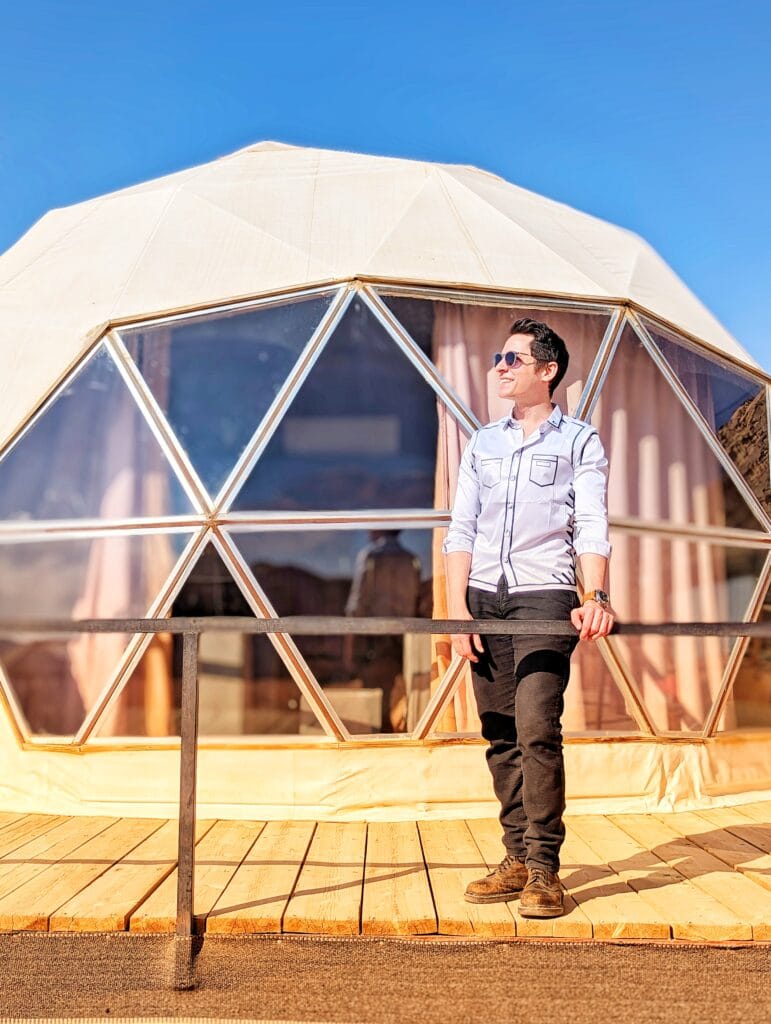
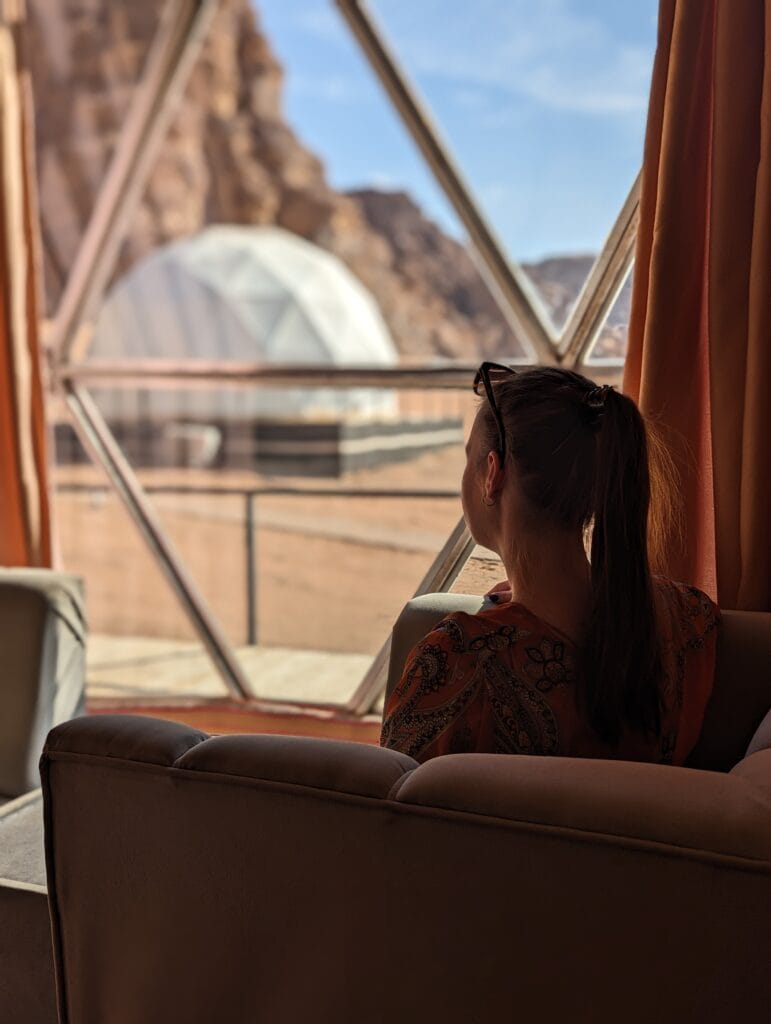
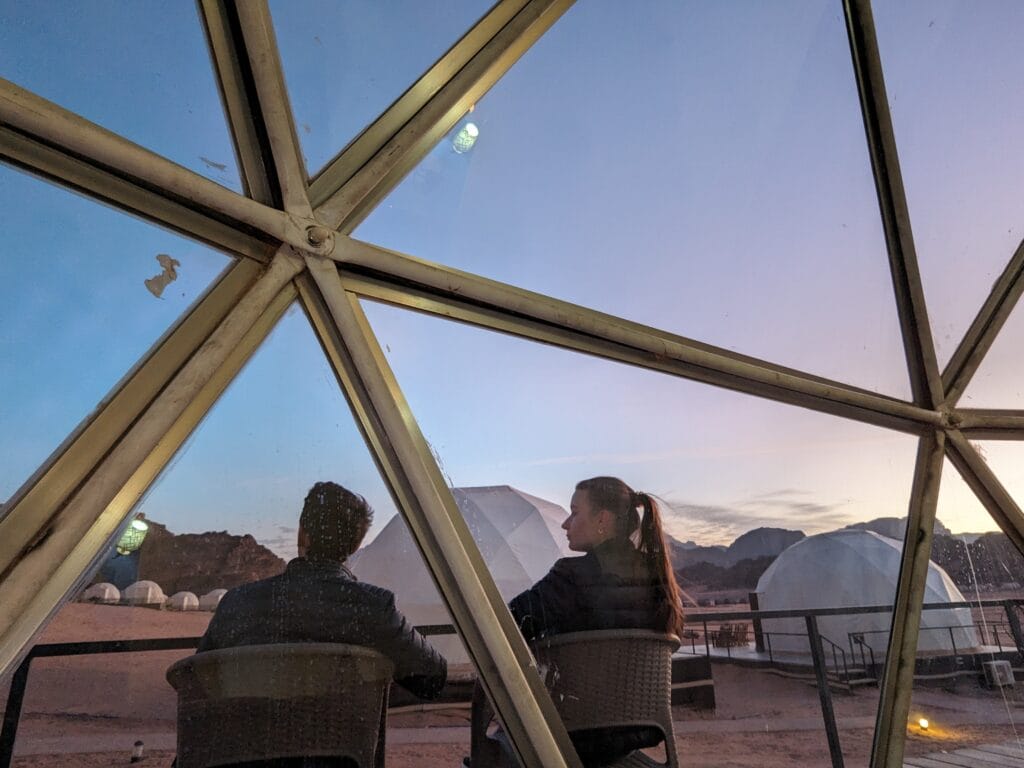
What we did: Hasan Zawaideh Camp. We stayed in the Mars tent; one of those geodesic dome rooms with clear panels for stargazing from bed. Dinner and breakfast were included in the price, served as buffets in a large communal tent. The food was good. The camp is on the edge of the desert near the village of Disah, which means it’s accessible by 2WD and you don’t need a 4×4 transfer from the village. It’s also walkable to the Heritage Arab Revolt train experience, which was a bonus we didn’t plan for.
Other options by category:
Luxury: Memories Aicha Luxury Camp, Wadi Rum UFO Luxotel. These are the high-end bubble tent camps — geodesic dome rooms with clear panels, private bathrooms, heating, AC, and proper beds. Expect to pay 150-250 JD per night.
Mid-range: Hasan Zawaideh Camp, Wadi Rum Dream Camp.These are the sweet spot — comfortable tents, good food, included activities, and a Bedouin family running the show. 40-80 JD per night.
Budget: Candles Camp, Wadi Rum Hikes & Camp. Basic tents, shared bathrooms, no frills, but the experience is still the desert. 15-30 JD per night.
Cave camping: Wadi Rum Cave Camping. You sleep in an actual Bedouin cave. Minimalist. Authentic. Cold. Start at 55 JD per person.
The key question: Can you drive to the camp, or do they need to pick you up in a 4×4? If you’re on a budget tour, the camp will organize the transfer. If you’re driving yourself, check that the camp is accessible by 2WD. Most camps inside the protected area require a 4×4 transfer.
Our take: Hasan Zawaideh was the right call for us. The Mars tent gimmick is fun, the stargazing from bed is real, and having the train experience within walking distance meant we didn’t have to coordinate extra transport.

Travelling around Jordan? Here’s where to stay.
The Wadi Rum Jeep Tour: The Main Event
The jeep tour is how you see Wadi Rum. There are no walking paths connecting the main sights. You need a 4×4, and your camp will arrange one.
Standard durations:
- 2 hours: Covers the basics. Lawrence Spring, Khazali Canyon, a sand dune. Good if you’re tight on time.
- 4 hours (half-day): The most popular option. Adds the Red Sand Dune, Burdah Rock Bridge (view from below), and a sunset viewpoint. Enough to feel like you’ve seen the desert.
- Full day (6-8 hours): Adds Umm ad Dami (Jordan’s highest point), the Little Rock Bridge, deeper canyons, and a lunch stop. For the committed.
What we did: We did the half-day tour with sunset. Our guide drove us through the main sights, the canyons, the dunes, the rock bridges. We hiked up a sand dune (this is harder than it looks), watched the sunset from a viewpoint, and had tea made on a campfire in the middle of nowhere. It was the right amount of time. The desert gets cold fast once the sun goes down.
Cost: 35-50 JD per person for a half-day, depending on your camp and group size. Full-day tours run 60-100 JD.
What you’ll see:
- Lawrence Spring: A natural spring T.E. Lawrence used. Small, underwhelming, but a good first stop.
- Khazali Canyon: A narrow canyon with 2,000-year-old Nabataean petroglyphs. You can walk through it in about 10 minutes.
- Red Sand Dune: The big one. You can sandboard down it. Most people slide down on their backs. The sand is fine and gets everywhere.
- Burdah Rock Bridge: The most famous natural arch in Wadi Rum. You can hike up to it if you have time and energy.
- Umm Fruth Rock Bridge: A smaller, easier rock bridge. Good photo spot.
- Sunset viewpoint: Wherever your guide picks. They all know the good spots.
Our take: The jeep tour is the backbone of Wadi Rum tours. It’s also the most touristy part. You’ll see other jeeps. You’ll share the viewpoints. Don’t let that bother you. The desert is big enough that it still feels vast.

The Heritage Arab Revolt Train Experience
This is one of the most unexpectedly fun things we did in Jordan. I booked it thinking it would be a bit of a tourist show and it was, but it was also genuinely cool.
Here’s what happens. You board an authentic Hijaz Railway train from the early 1900s. The train departs from a station near the camps and heads into the desert. About 20 minutes in, you hear gunfire. Men on horseback ride out from behind the rocks, firing blank shots. They’re reenacting the 1916 Arab Revolt. They board the train. There’s shouting. A brief history lesson. Then the train stops and you get tea and photos with the horses.
It’s a theatrical reenactment. It’s also the closest you’ll get to understanding what this desert meant to the people who fought here. The train runs on Wednesdays and Sundays, typically around 4:00 PM. The whole experience lasts about an hour. Cost is included in some camp packages or runs about 15-20 JD.
I didn’t tell my parents about this and only posted a video to my story, so you can imagine they legitimately thought we ran into trouble for a second.
(I realize I sound like a dork being excited about a historical reenactment. I don’t care. Rides through the desert with men on horseback firing blanks. It was fun.) BOOK HERE.
Wadi Rum Hot Air Balloon…Worth It?
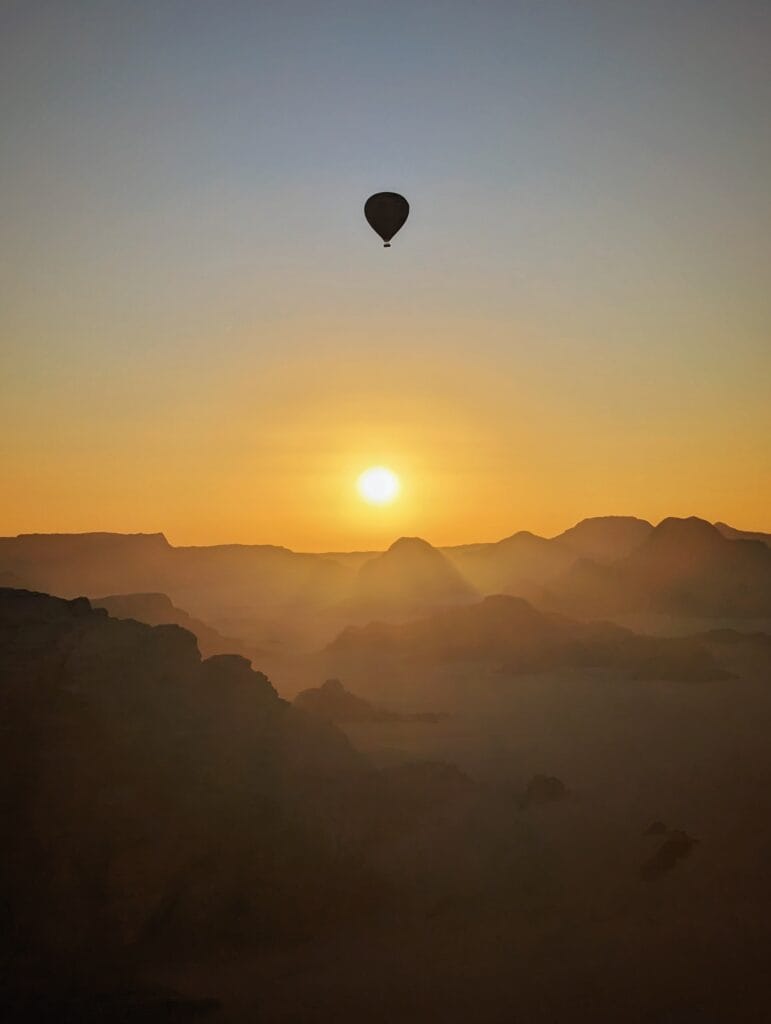
We did the hot air balloon at sunrise. It was the most expensive single activity of the trip and I’d do it again.
The routine: You get picked up from your camp around 5:00 AM. They drive you to the launch site in the middle of the desert. The crew spends 30 minutes setting up the balloon, laying it flat, running the fans, firing the burners. It’s a process and it’s interesting to watch. You climb into the basket, lie down backward (it’s being inflated, you’re not standing yet), and then slowly the balloon lifts and you’re upright.
The view is absurd. The desert at sunrise is a gradient of red and orange and gold. The rock formations cast long shadows that shift as the sun rises. You can see the Saudi border. You can see the places where they filmed The Martian. The captain was Finnish, which I found oddly reassuring. (Finnish people are calm. That’s what you want in a balloon pilot.)
We were slightly scared. I’ll be honest. You watch enough balloon crash videos online and you wonder. But the actual experience is so peaceful. You don’t feel the wind. You don’t hear the desert. You just float. Landing was soft. They drove us back to camp with breakfast waiting.
Cost: Around 150-245 JD per person depending on the operator. It’s expensive. It’s also one of the best places on earth for a balloon ride. Book here.

Other Things to Do in Wadi Rum
Camel rides. This is the classic. Most camps offer 1-2 hour rides. It’s not the most efficient way to see the desert, but it’s the most atmospheric. Expect to pay 15-25 JD.
Stargazing. Wadi Rum has some of the lowest light pollution in the world. After dinner, your camp will likely have a fire going and blankets out. You can see the Milky Way with the naked eye. If you’re there during a new moon, it’s genuinely overwhelming.
Hiking. Umm ad Dami (Jordan’s highest point) takes about 3-4 hours round trip. The Burdah Rock Bridge hike is shorter but requires a head for heights. Both are best done with a guide.
Sandboarding. The Red Sand Dune has boards available. You slide down on your feet or your back. It’s a good way to feel like a child for 10 minutes.
What to Wear on Wadi Rum Tours
The desert is cold at night and hot during the day. This is not a helpful statement, but it’s true. You need to prepare for both.
Daytime: Light layers. A long-sleeve shirt, trousers, and a hat. The sun in the desert is brutal even in winter. The red sand reflects light from below, so you’re getting UV from every direction. Sunglasses are essential. So is sunscreen.
Nighttime: The temperature drops fast. In January, we were in the low 40s F overnight. A good jacket, a fleece, and a beanie were essential. Winter can drop to freezing.
Footwear: Closed-toe shoes with ankle support. You’ll be walking on sand, rock, and sometimes steep gravel paths. Sandals are a bad idea. Trail runners or hiking boots are ideal. Go barefoot when climbing dunes if not too hot.
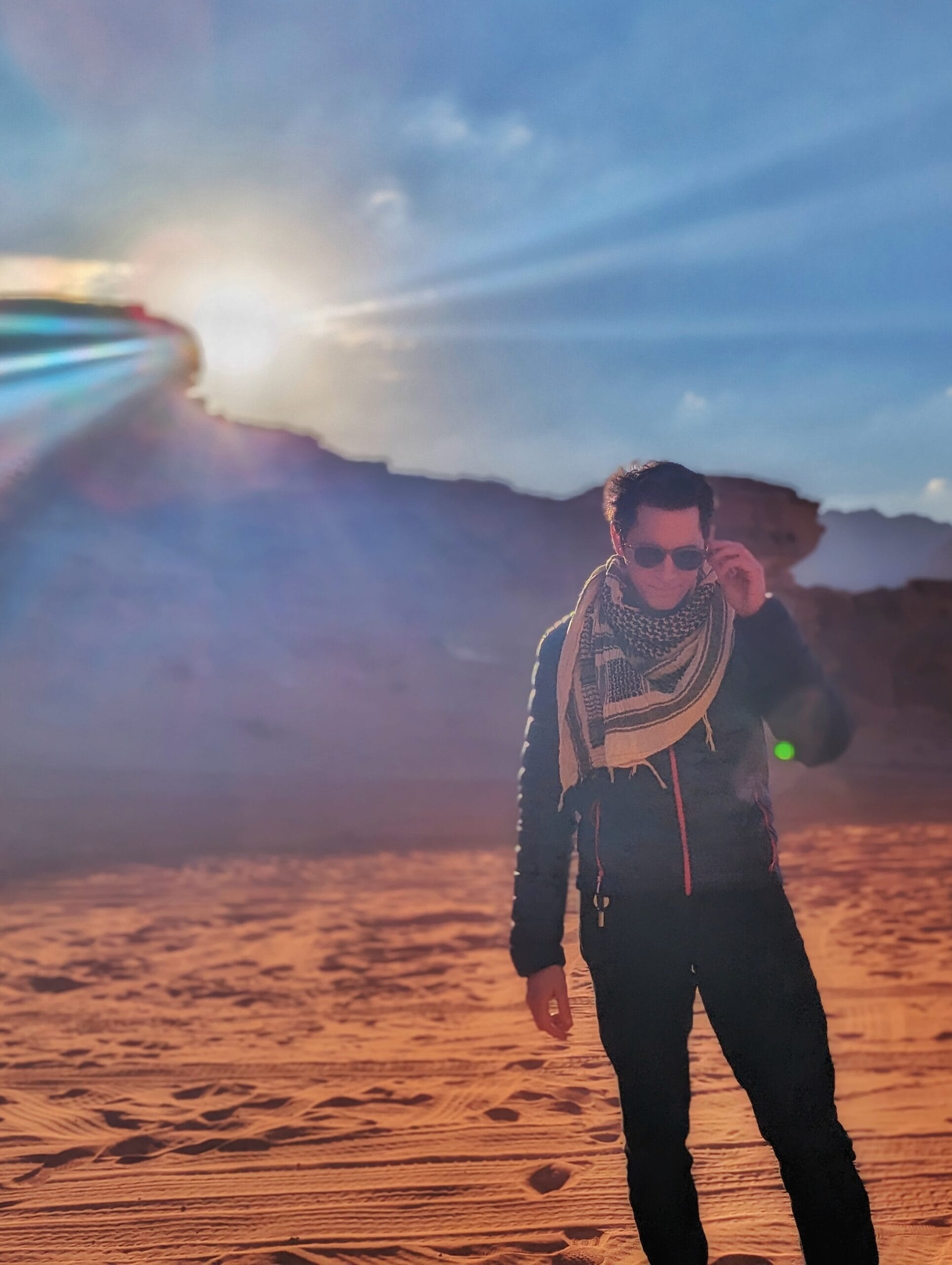
Head/face: A shemagh or scarf is useful for the afternoon winds. The sand will find its way into everything. Accept this.
Our take: For my Wadi Rum tours, I wore a light jacket during the day and a heavier fleece at night. A shemagh for the dust. My shoes were perpetually full of sand. As always, I brought what I always do on trips for a good sleep.
You may not have eSim service, but you’re camp may provide wifi in the central tents.
Best Time to Visit Wadi Rum
Spring (March-May): The best time. Moderate temperatures, clear skies, wildflowers in the wadis. Daytime is comfortable for hiking. Nights are cool but not freezing.
Autumn (September-November): Also excellent. Same moderate temperatures. Crowds are higher, especially in October.
Winter (December-February): We went in January. Daytime was pleasant (around 15°C/60°F) but the sun is strong. Nights were cold (0-5°C/32-40°F). The benefit is smaller crowds and lower prices. The downside is that you need real layers.
Summer (June-August): Too hot for most people. Daytime temperatures hit 40°C/100°F+. Tours run at dawn and dusk. Everything shuts down in the middle of the day. Not recommended unless you’re heat-resistant.
Our take: January was perfect for us. The desert was empty, the light was good, and the cold nights meant we actually appreciated the campfire. But I carry a jacket everywhere. If you run warm, go in spring or autumn.
Is Visiting Wadi Rum Worth It?
Yes. It’s one of the most visually striking places on earth. The photos don’t do it justice. The scale is something you feel in your chest.
But it’s also a curated experience. Wadi Rum is not “roughing it.” There are hundreds of camps. There are jeep tour circuits that everyone follows. There are Bedouin families who have turned tourism into a viable business, and good for them. It’s not a wilderness adventure. It’s a desert experience with infrastructure.
Go in knowing that. You’ll be served tea by a Bedouin guide who’s given this exact speech 50 times. You’ll share a sunset viewpoint with three other jeeps. You’ll eat a dinner that was cooked for 20 people. And you’ll still walk away feeling like you’ve been somewhere special.
The desert at night, when the camp is quiet and the fire is low and the stars are doing their thing above you, makes up for all of it.
Should I do Petra or Wadi Rum if I’m short on time?
Don’t skip either. They’re completely different experiences: Petra is a day of walking through ancient carved architecture, Wadi Rum is a night of sleeping in the desert under stars. If you truly only have one day, choose based on what you want: history and awe (Petra) or landscape and silence (Wadi Rum). But the classic itinerary does both in three days and it’s the right call. Petra one day, Wadi Rum the next, Dead Sea on the way back.
Follow my full 7-day itinerary for Jordan.
Plan your Petra Visit here.
FAQs About Wadi Rum Tours
Wadi Rum is a place that rewards you for being present. The jeep tour is the main event, but the real moments are the in-between ones. The tea on a campfire. The dog that walks with you for two kilometers and then disappears. The stars. The silence after the fire dies down.
I went in expecting Mars. I got a place that’s entirely itself, and that was better.
Go. Take the back of a jeep. Eat the Zarb.
Disclaimer: This post contains affiliate links. If you make a purchase through these links, I may earn a commission at no extra cost to you.